The Work Before Us
Recently, I traveled to South America on a farm training trip where we taught practical skills that can open doors to share the Gospel. On our return journey, as we bumped along a winding gravel road high in the Andes early one winter morning, our conversation turned to avodah.
What is avodah? It is a Hebrew word that can mean work, worship, or service, depending on the context. It appears around 145 times in the Hebrew Bible, describing everything from ordinary labor to service offered to God.
That range of meaning is what makes avodah so powerful. In its biblical use, avodah does not separate normal, everyday work from worshiping God. The same word encompasses both. Everything we do or work at is an opportunity to worship the Lord.
In our case, traveling across the mountains was avodah. Teaching our brothers and sisters in a remote village how they could use the resources God had given them to increase their potato harvests was avodah. Digging holes for planting was avodah. Collecting grass and alpaca manure was avodah.
But now we were on our way home. What does avodah look like on a normal, uneventful, same-old, 9-to-5 day?
My profession is engineering. What was an engineer doing teaching agriculture? I am also a farmer and have training in sustainable agriculture, but let’s not get distracted.
More than anything else, I think of engineers as problem solvers. That is what we do. We work to solve problems for our team and for our brothers and sisters around the world.
On a normal day, I spend a large portion of my time at a desk, working on the computer to create 3D models and edit manufacturing drawings. The equipment we design is unique because it is intended for use in a developing-world context.
Every design must be sustainable, which means the parts needed to build or repair it can be found in its destination country at a reasonable price. That requires the design team to be creative and resourceful, which makes for an amazing challenge.
Can you build a machine that separates corn kernels from the cob or beans from their shells using only a stick welder, an angle grinder, and a few hand tools?
Yes. We call it the grain thresher.
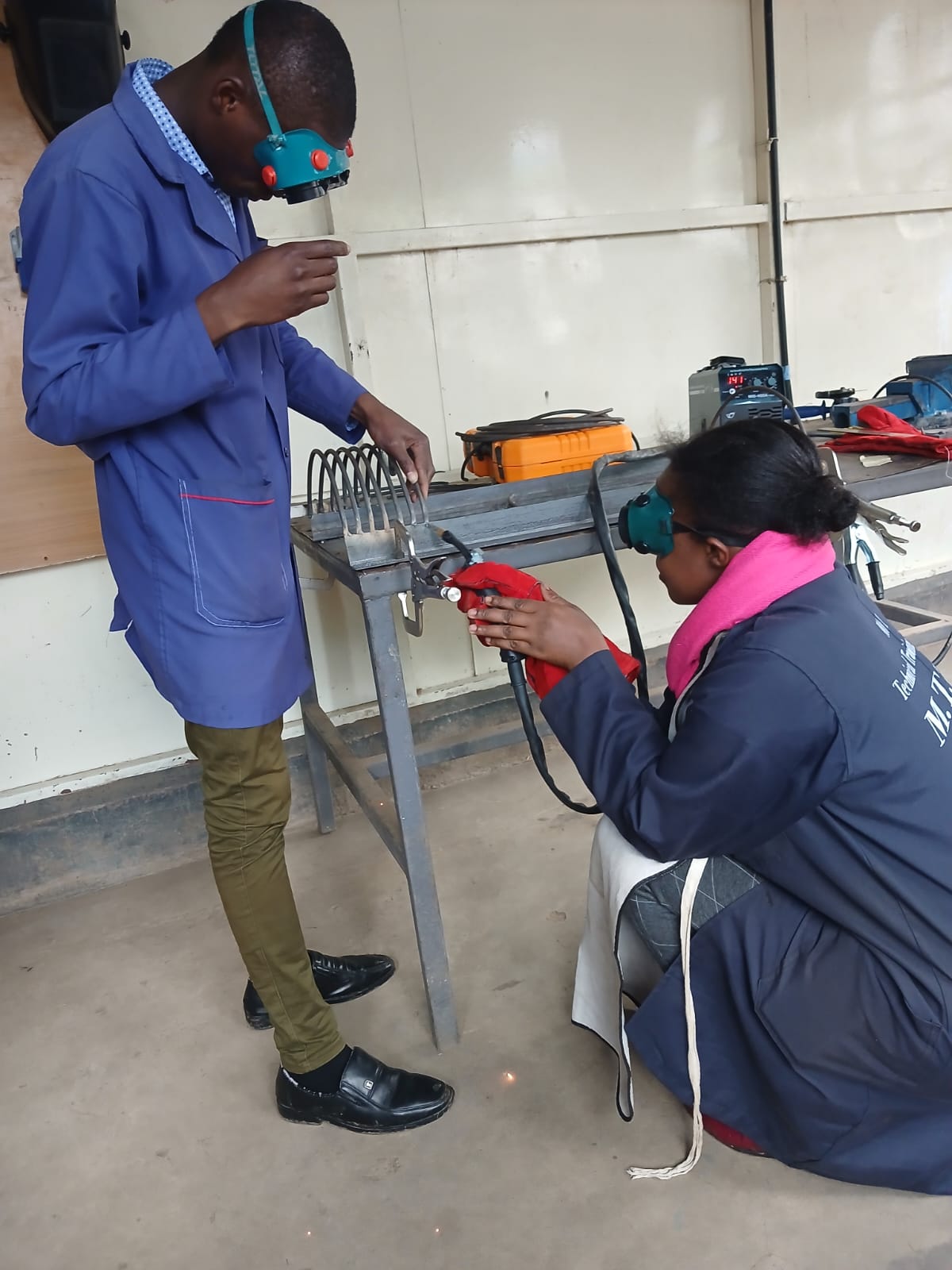
The grain thresher has moved beyond the design and testing stages. This year, ITEC teams made three trips to East Africa to train local Christ followers to fabricate it themselves. One Christian trade school intends to use the thresher to teach students a trade, generate income, and open doors to share the Gospel within the community.
In this case, avodah is using the talents and skills God has given us to serve His Kingdom. But it often looks like hours of welding and grinding, hammering and sweating, trying and failing, then re-grinding, re-welding, and trying again.
It looks like drawing, redrawing, and redrawing parts yet again as the machine is updated and improved. It looks like answering emails, attending team meetings, and sweeping the floor. Each task is part of the work placed before us.
But avodah does not end there.
It also looks like going home and washing the dishes without grumbling when someone else did not do their share. It looks like doing the laundry and changing the oil in the car. It looks like wiping tables after the fellowship meal at church.
Whatever work, skill, or passion God has placed before us is an opportunity to serve and worship Him.
What does avodah look like for you?
Join us in praying that God will multiply the impact of the engineers, trainers, and indigenous Christ followers using their skills to serve their communities and open doors to share the Gospel. To learn more about ITEC’s work, contact us at [email protected].